25.05.2026 · Health & Sleep
Sleep disorders: causes, consequences, countermeasures Isolation booths shield against sensory stimuli
Many external & internal factors can disturb our sleep architecture and have bad consequences. What sleep deprivation does to us - and what we can do.
The healing power of silence
What is meant by normal and disturbed sleep architecture?
Sleep architecture refers to the structured, orderly sequence of the various sleep phases during a night. It is the fine, cyclical interplay of light, deep and dream sleep (REM phase), which follows a similar pattern in every person, with very different characteristics.
This cycle usually takes place four to seven times per night; the phases usually last between 90 and 110 minutes. Sleep architecture changes the longer you sleep.
- In the first half of the night, physical deep sleep dominates.
- Towards morning, the cycles become shorter and the proportion of mental REM sleep increases significantly.
A disturbed sleep architecture leads to sleep fragmentation - i.e. the interruption of this natural sequence/interplay of the individual phases. There are repeated waking phases, often only a few seconds long. Or we go through a disproportionate number of light sleep stages.
What causes such sleep disorders?
Numerous circumstances can play a role here: breathing disorders (sleep apnea), shift work, too much alcohol or nicotine, jet lag, movement disorders such as restless legs syndrome (RLS), external factors such as noise, light, temperature fluctuations, etc.
In addition, there are internal triggers such as pain, the urge to urinate, psychological stress. Or severe neurological diseases such as myalgic encephalomyelitis (ME) - often in combination with chronic fatigue syndrome (ME/CFS).
The core processes and their disorders
- Loss of deep sleep: if the deep sleep phases are missing, physical regeneration, cell renewal and the immune system suffer.
- Lack of REM sleep: REM sleep is essential for emotional processing and memory formation. If it is missing, those affected are often irritable, stressed and psychologically less resilient.
- Increased stress response: frequent waking at night, e.g. due to noise or sleep apnea, puts the body on alert. Pulse and blood pressure rise.
What are the immediate consequences of disturbed sleep architecture?
The body is robbed of the all-important, uninterrupted recovery phase; it reacts with stress and the release of hormones, which the next day leads to massive daytime sleepiness, poor concentration, reduced performance and emotional instability.
In people suffering from ME/CFS, sleep disorders also often lead to a drastic, sometimes irreversible deterioration of the overall symptoms (crash). Details here.
What are the long-term consequences of disturbed sleep architecture?
If our sleep architecture is permanently disturbed, body and mind are deprived of essential recovery phases. In the long term, this leads to serious damage.
Mentally, there is a threat of massive concentration problems, memory gaps and faulty emotional regulation, which greatly increases the risk of depression and anxiety disorders.
In addition, the risk of Alzheimer's increases, as the brain lacks the deep sleep it needs to break down toxic metabolic products.
Physically, a persistent sleep deficit leads to chronic high blood pressure, which drastically increases the risk of heart attacks and strokes.
At the same time, the "hunger hormones" get out of control - the messengers that signal to the brain: "I'm hungry." Frequent cravings, resulting obesity and a higher likelihood of type 2 diabetes are the consequences.
In addition, the immune system collapses, making the body extremely susceptible to infections.
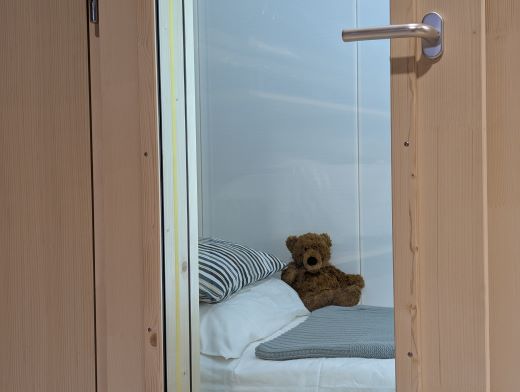
Sleep pods shield from noise and light
There are a number of helpful tips against sleep disorders. This starts with adjusting your lifestyle and ends with so-called sleep hygiene. This includes fixed wake-up times, an optimal room temperature (around 16–18 °C) and avoiding alcohol and caffeine late in the evening. Light exercise also promotes sleep, while intense exertion before going to bed should be avoided. Fixed sleep rituals such as reading or relaxation exercises signal rest to the body. For mild complaints, herbal remedies such as valerian or lavender can also help.
What if none of this helps? - People with noise and light sensitivity in particular need a sleeping environment that is shielded as well as possible against sensory stimuli. The sleep pods from Studiobox - be it the STANDARD model or the biological alternative ROSI - offer exactly this environment. Massively soundproofed (down to -53 dB), largely or entirely made of wood - and beneficial to health in the long term.